History
Is Elvis The King of Rock T-Shirts?

From Bobby-Soxers to Band Tees: The Birth of Wearable Fandom
Legend has it that teenage girls in the 1940s known as Bobby-Soxers — named for their ankle-high white socks rolled down above saddle shoes — created the first unofficial band merch. Long before silk screens and licensing deals, these young fans supposedly turned their wardrobes into shrines of devotion. According to popular lore, some even inked the names of their favorite crooners across sweaters, collars, and shirt hems, transforming plain garments into personal billboards for stars like Frank Sinatra, Bing Crosby, and Perry Como. So far, we haven’t uncovered any surviving photographs or garments that clearly show this hand-lettering — more on this below; the search is ongoing. The story remains a vivid symbol of early fan creativity and identity.
The phenomenon grew alongside the first explosion of teen culture in the United States. As historian Kelly Schrum notes in Some Wore Bobby Sox, postwar teenagers represented a new consumer force — one that advertisers, record labels, and Hollywood were only beginning to understand. For the first time, adolescents had disposable income and a social identity distinct from adults. Bobby-Soxers weren’t just fans; they were prototypical superfans — lining up for hours outside the Paramount Theatre in New York, screaming themselves hoarse for Sinatra, and crafting their own visual language of loyalty.
Newspapers of the day described the Bobby-Soxer craze as near-hysteria. Reports from 1944 painted scenes of teenage girls crowding the Paramount in sweaters, saddle shoes, and homemade tributes to Sinatra — pinning his photo to their blouses or carrying his name scrawled on signs and scrapbooks. Life’s 1944 Sinatramania photo spread captured the frenzy in real time—tears, crowds, and portraits held aloft—long before fan graphics moved from walls and scrapbooks to cotton. It was a kind of DIY fan fashion that blurred the line between self-expression and belonging — nearly a decade before the first rock T-shirt made fandom something you could buy.
By the 1950s, that energy began to formalize. Licensing executives such as Henry G. Saperstein saw what these girls had been doing all along and recognized a new revenue stream: official fandom as fashion. In 1956, with Elvis Presley’s breakthrough, those handmade homages evolved into printed and mass-marketed T-shirts — the moment DIY devotion met commercial opportunity.
Which Artist Was the First to release a Rock tee?
Given Elvis’ towering presence in the 1950s, it’s easy to assume that if any early rock musician had a T-shirt, it would be the King himself. And sure enough, the Presley merch machine of 1956 seems to bear that out. But to be certain — and to keep myself honest — I wanted to test that assumption. Were there any other contenders? Because in clothing archaeology, even the smallest wrinkle in the fabric can rewrite the story.
I dug deep: Google, newspaper archives, WorthPoint, fan sites, even AI-indexed databases. I searched for Chuck Berry, Little Richard, Jerry Lee Lewis, and every other name that electrified a jukebox in the Eisenhower era. Nothing. Not a single verified example of a T-shirt. But what if I changed my search criteria to “shirt” just to be sure?
That’s when I get a hit from Bill Haley — the bespectacled bandleader whose Rock Around the Clock arguably ignited the entire genre. If anyone could challenge Elvis for the title of “first rock-tee artist,” it would be Haley.
So, naturally, I went looking there next.
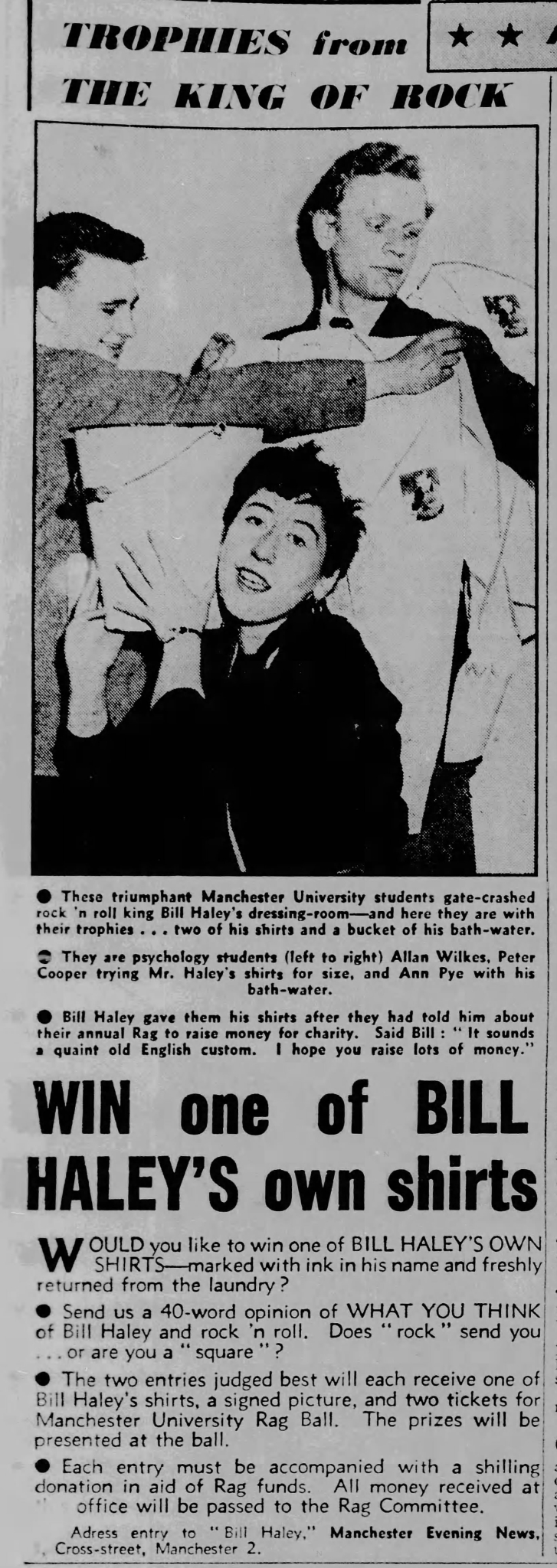
Manchester_Evening News 1957
A 1957 piece in The Manchester Evening News crowned him the “King of Rock,” echoing a title that had already begun orbiting Elvis. The earliest known print use of that nickname for Presley appeared on April 19, 1956, when reporter Bea Ramirez of the Waco News-Tribune dubbed him the “21-year-old king of the nation’s rock ’n’ roll set.” Within a year, two different men were wearing the same crown.
But — cue the Price Is Right losing-horn sound effect — Haley’s brush with the title didn’t extend to t-shirts. He wore crisp, white button-downs, and in one memorable incident, a few Manchester University students gatecrashed his dressing room and made off with some of them. If you look closely at the photos from that story, the shirts do appear to bear his image — though they were stage wear, not fan merch, and definitely not of the t-shirt persuasion.
The article also promoted a contest to give away two of Haley’s shirts — a detail that’s fascinating in its own right. Combined with the story of fans gatecrashing his dressing room to grab a few, it may represent one of the earliest documented instances of stage-worn clothing being offered to fans. A small but telling glimpse of the fan behavior — and merch marketing — that would soon be an integral part of rock ’n’ roll culture.
So yes, for a brief moment in the mid-’50s, there were at least two “Kings of Rock.” But only one would go on to reign supreme — and only one would inspire the first true rock ’n’ roll T-shirt.
Elvis’ 1956 T-shirt Is the First Rock Tee
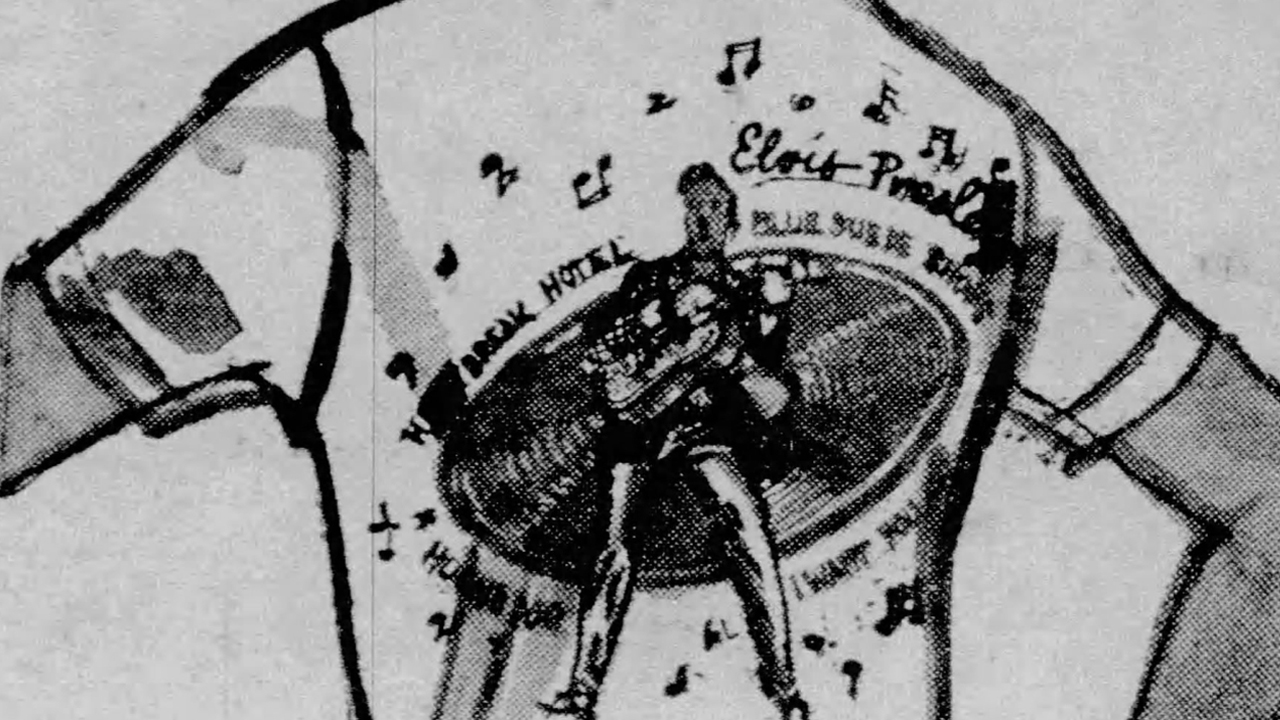
This is the Elvis t-shirt that dates back to 1956. In at least two of the vintage t-shirt books I’ve reviewed, this tee is cited as the first rock t-shirt. In Amber Easby’s book The Art of the Band T-shirt, she points to it as the first. In Stephen Voland’s book T-Shirt Fantasy, he describes it as “Arguably, the first official mass-market ‘rock t-shirt’ ever produced.”
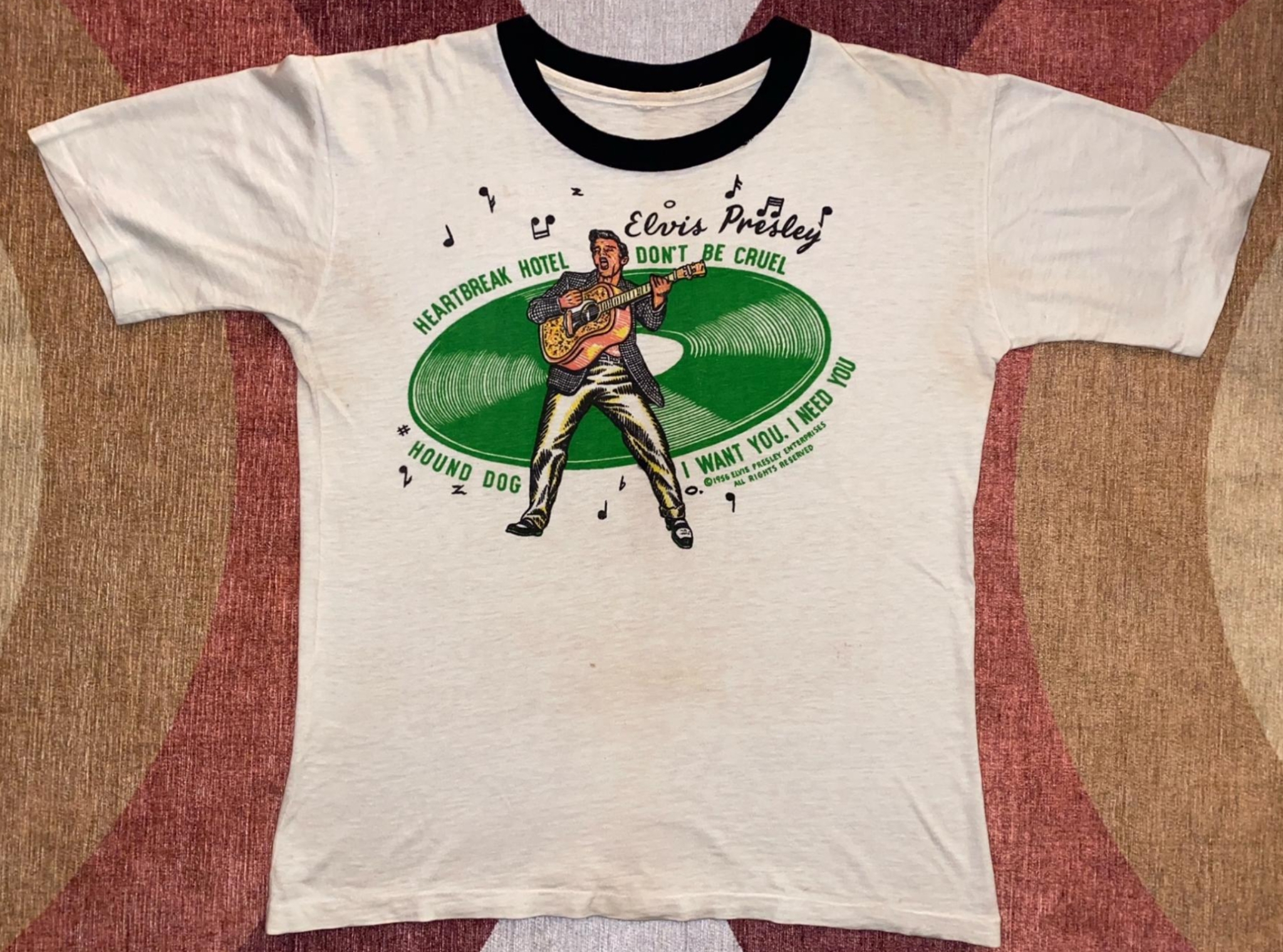
IG/stephenvoland
Admittedly, I always had a touch of doubt that it was actually from 1956. Sure, it had a 1956 copyright (not all of them did, btw), but we know that the copyright date doesn’t necessarily mean when the t-shirt was actually printed. In this case, the songs featured on the t-shirt were all from 1956, too, so in theory they could have been copyrighted in 1956, but the shirt was printed later to capitalize on The King’s earlier work, as his stock continued to skyrocket.
I also thought the print was pretty advanced for that era. It’s finely detailed. Check out that pattern in his jacket and the groovy details in the record. Most of the 50s adult t-shirts I had ever had in my possession were one or two colors and pretty basic, filled shapes. I have handled a few kids’ t-shirts from that era, with more intricate prints and colors. But for the record, I’ve usually focused on t-shirts from the 1970s onward.
So first things first, can I prove this t-shirt was actually available in 1956?
Turns out I can.
I scoured through newspaper archives and managed to track down these two ads, both from the latter part of 1956.
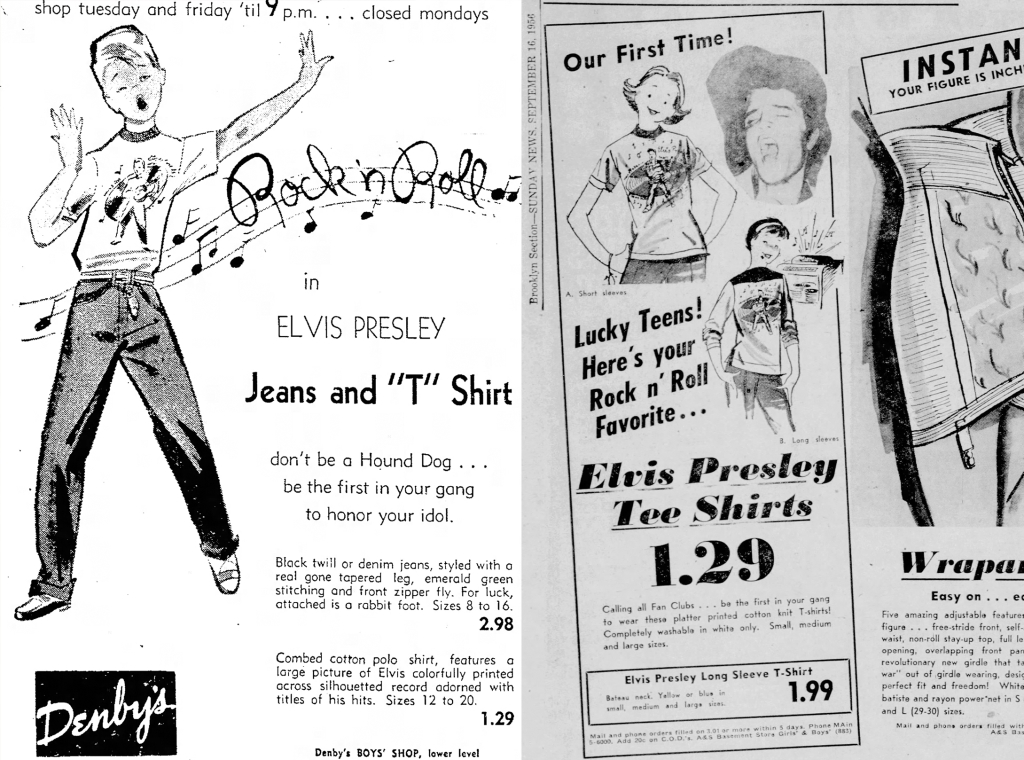
Denbys The Troy Record 1956/Daily News 1956
Interestingly, both ads are targeted at youth, which explains why so many of the ones still floating around today are always so small. It also explains the print, as kids’ t-shirts were the primary clothing destination for silk-screen printing in the 1950s.
One theory floating around was that these t-shirts were only available through the Elvis fan club, but we now know that’s not true. And man, did I get a lot of hits on these t-shirts across numerous publications and years. Here are two such examples from 1956 and 1957.
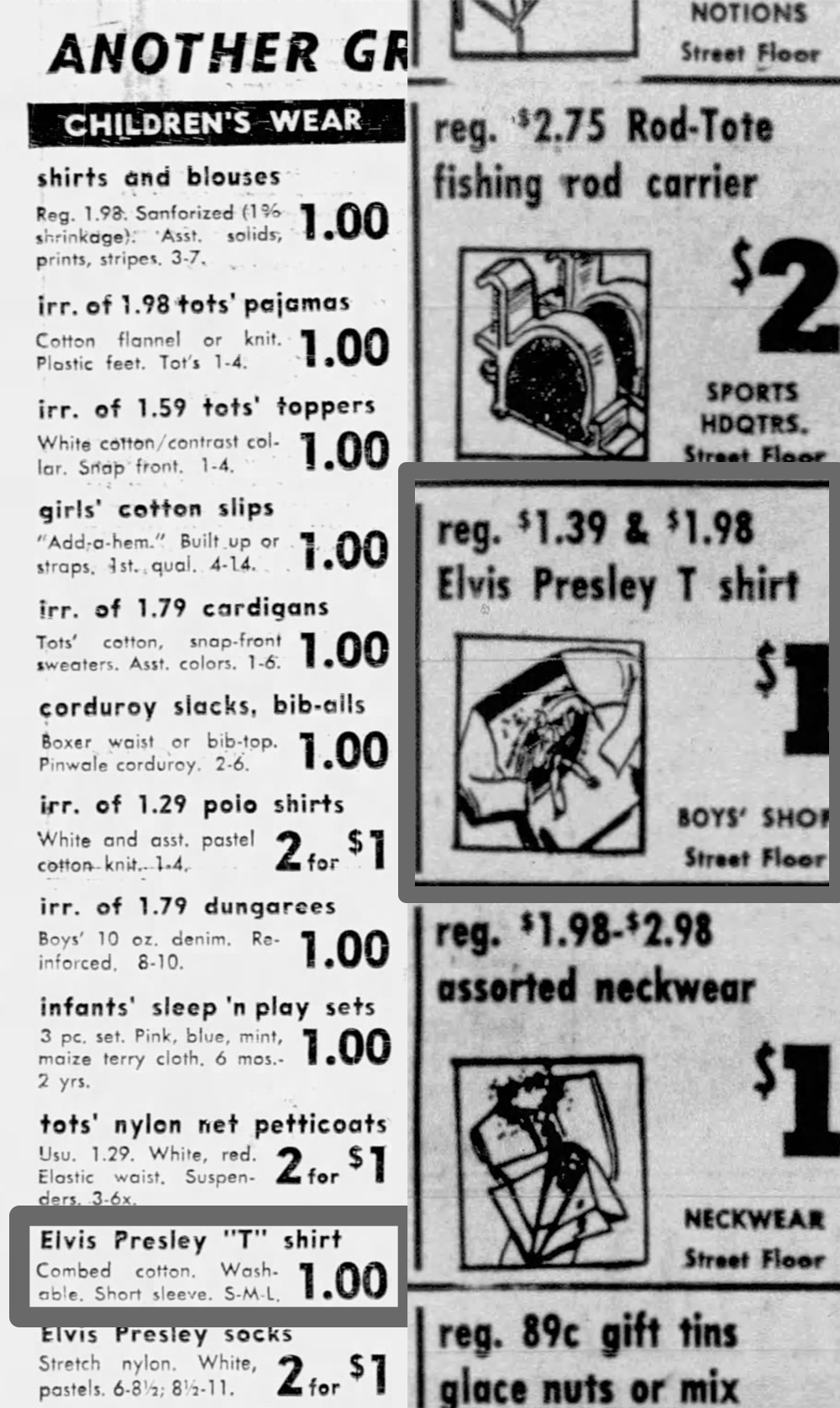
The Kansas City Times 1956/The Capital Journal 1957
Notably, another ad for children’s t-shirts.
Who Was Allison Manufacturing?
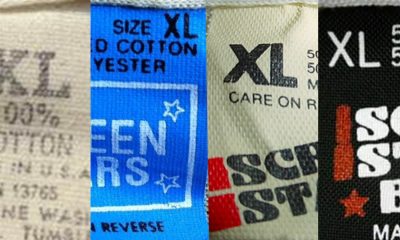
If one of these 1956 Elvis t-shirts actually still has a legible tag, it usually looks something like this.
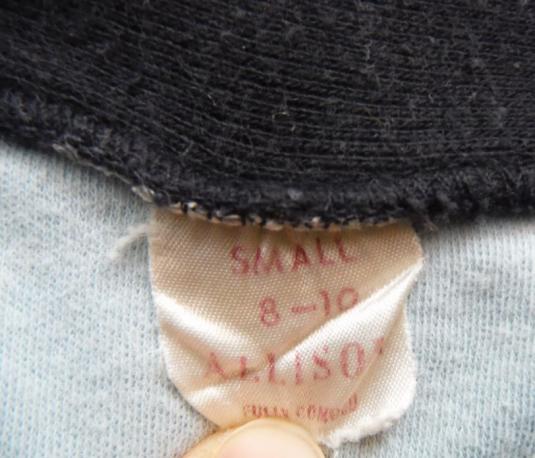
defunkd
Lots can be gleaned about Allison from an article in The Morning Call from 1965.
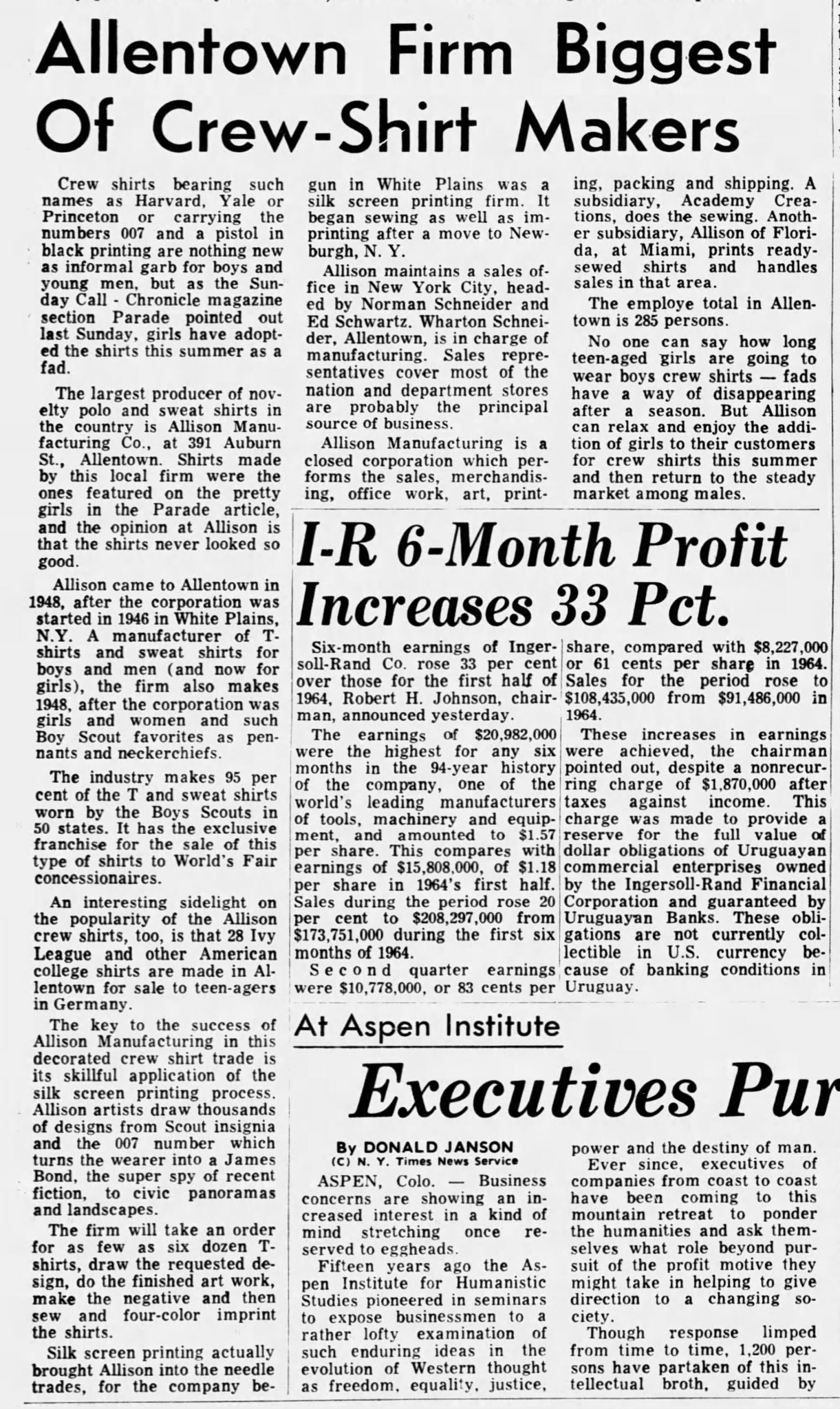
The Morning Call from 1965
Allison Manufacturing was founded in 1946 as a producer of T-shirts and sweatshirts for boys and men. From the beginning, the company employed its own staff of artists who designed specifically for silk-screen printing — then a specialized and somewhat experimental process. Based in White Plains, New York, Allison started small, but its creative approach to garment graphics quickly set it apart from standard knitwear makers.
A mid-century newspaper article about the firm noted a curious social trend: teenage girls were beginning to wear men’s and boys’ T-shirts and sweatshirts — a novelty the reporter predicted would fade as quickly as it arrived. Spoiler alert: it didn’t.
By the early 1950s, Allison had landed major accounts, producing apparel for the Boy Scouts of America and even the World’s Fair, establishing itself as a trusted supplier of youth-oriented tees. That experience — coupled with its in-house art team and screen-printing expertise — made Allison a natural fit when licensing agents like Henry G. Saperstein’s Special Products, Inc. went looking for a capable partner to manufacture character and celebrity merchandise in the mid-1950s.
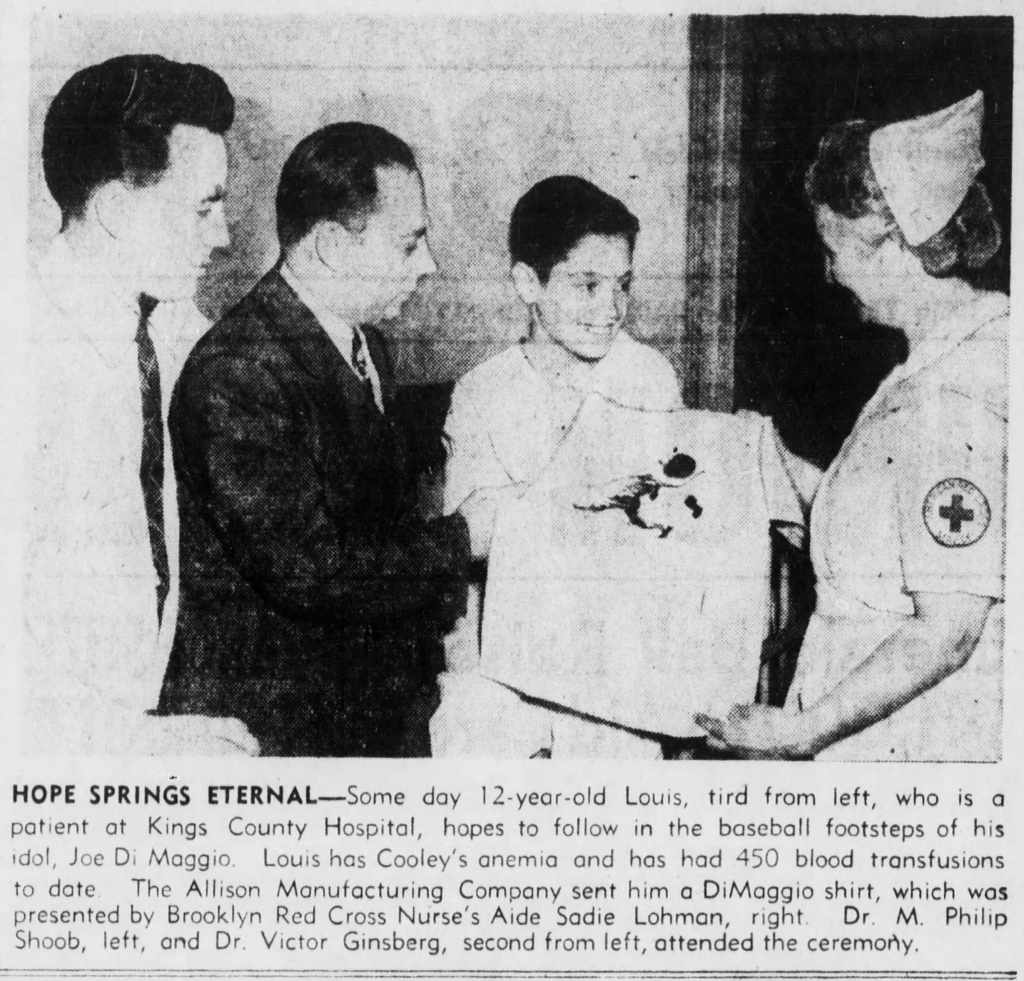
The Brooklyn Daily Eagle, 1949
By 1950, the company had established a reputation for itself in the children’s t-shirt market. The heartwarming gesture above got them plenty of media attention.
The company also took children’s safety to heart.
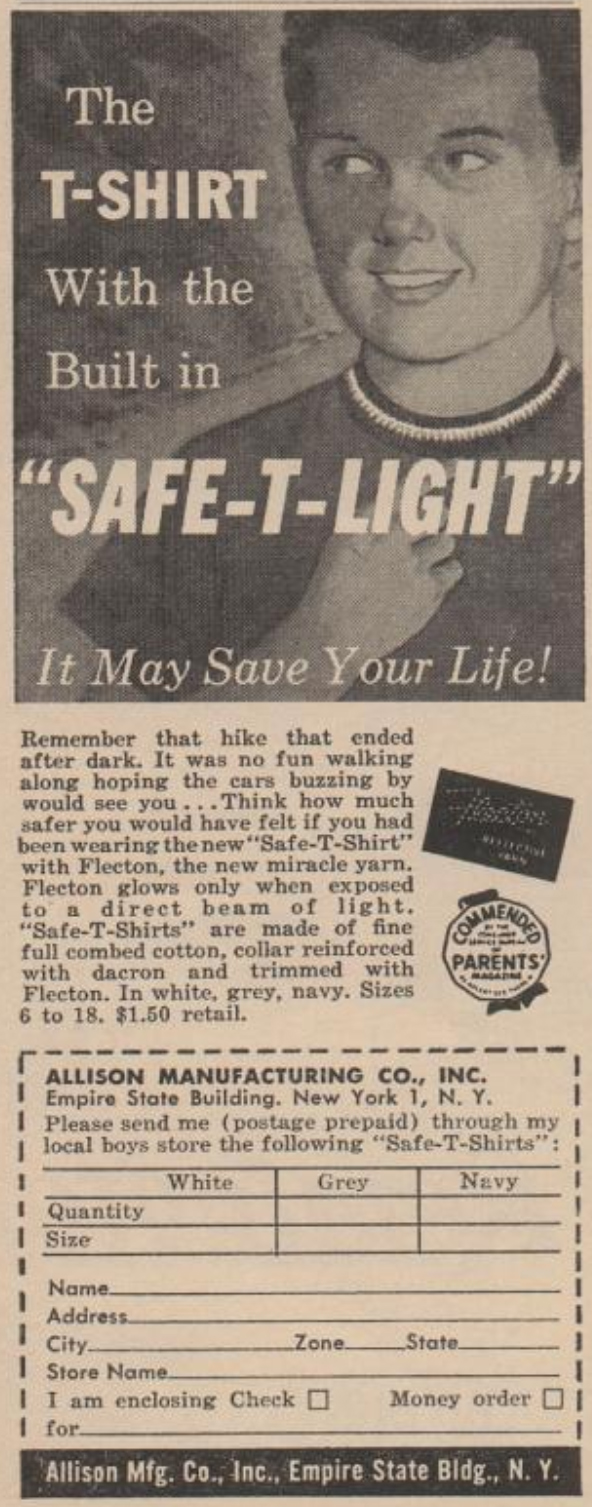
Boy’s Life March 1957
Again…kids, boys, girls, youth, teens. Could this mean the initial wave of these 1956 Elvis t-shirts was only made for youngsters? The theory tracks. Given in the mid-50s, t-shirts, and especially those printed on, weren’t yet standard wear for adults.
With their reputation solidified in the t-shirt niche, in 1956, a deal was struck between Elvis management, Henry G. Saperstein’s Special Products, Inc., and Stan Levitt of Allison, “which has the t-shirt and pajama concession.”
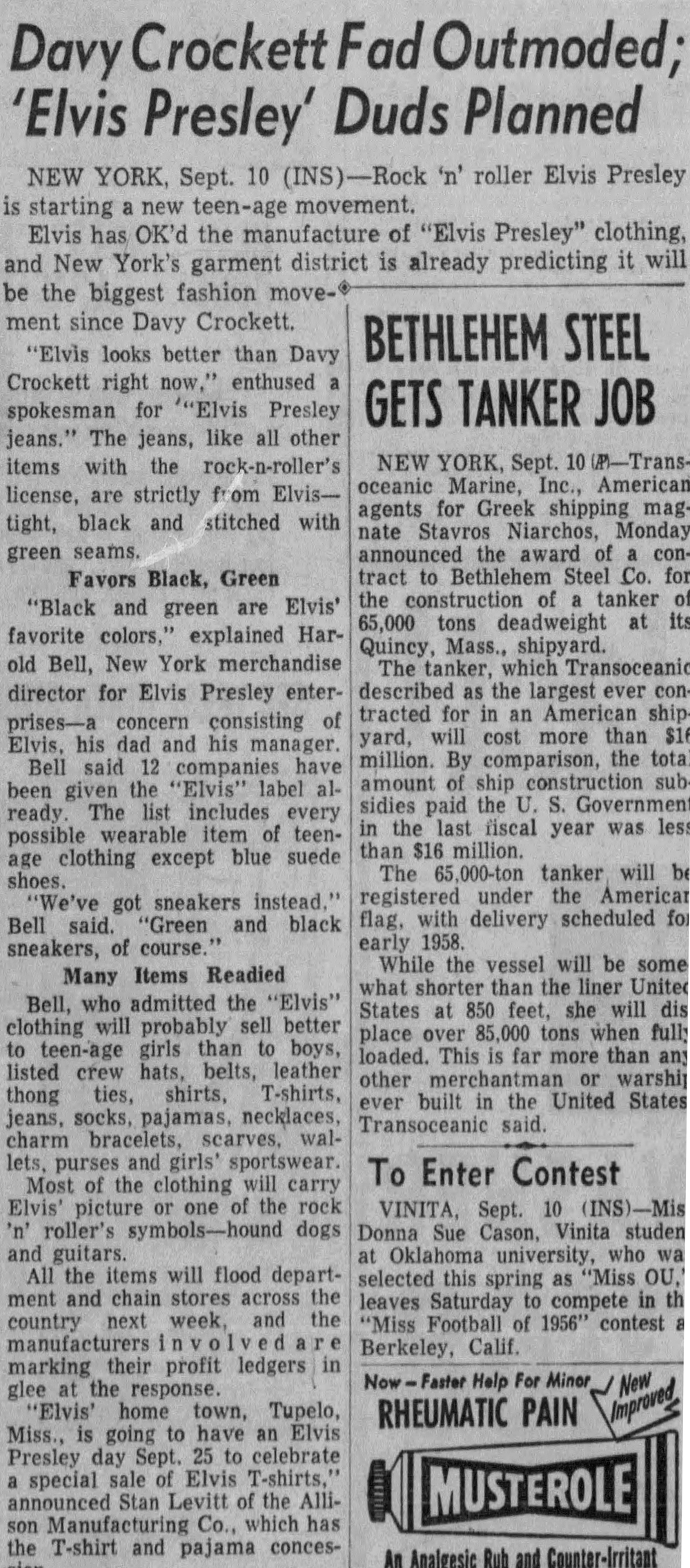
Tulsa World August 1956
Who Was Special Products, Inc.?
Special Products, Inc. was the brainchild of Henry G. “Hank” Saperstein, a Chicago-born entrepreneur who would become one of the earliest architects of American licensing culture. Before turning to film and television production, Saperstein made his name by creating tie-in merchandise for popular TV properties such as The Life and Legend of Wyatt Earp, The Lone Ranger, and Lassie. His company specialized in turning screen heroes into consumer goods — a relatively new concept in the postwar years — and built the template for how entertainment licensing still operates today.
By 1956, Saperstein had set his sights on music. Through Special Products, Inc., he brokered a deal with Colonel Tom Parker to merchandise a rising star named Elvis Presley. According to trade reports, including the August 25, 1956 issue of Billboard, Special Products announced the first wave of Presley-endorsed items: jewelry, stationery, hats, and crucially, a T-shirt. That listing remains the clearest documented evidence of the first mass-produced rock ’n’ roll T-shirt, marking the moment when fan devotion officially entered the retail pipeline.
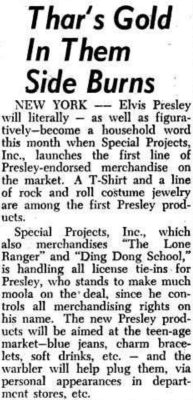
What is the First Rock T-Shirt?
After combing through archives, trade journals, and vintage garment listings, the evidence points decisively to Elvis Presley’s 1956 merchandise line, produced under Henry G. Saperstein’s Special Products, Inc. and manufactured by Allison Manufacturing Co. of White Plains, New York. Announced in the August 25, 1956 issue of Billboard, the officially licensed collection included jewelry, stationery, handbags, and a T-shirt bearing Presley’s image. Surviving examples, often tagged EPE/Allison, confirm that these were real, mass-produced garments sold during Presley’s breakthrough year.
There’s still no verified evidence of any other rock ’n’ roll artist — not Bill Haley, Chuck Berry, Little Richard, or Jerry Lee Lewis — having an earlier T-shirt tied to their name or likeness. The handmade fan wear of the 1940s Bobby-Soxers set the emotional precedent. Still, Elvis’s 1956 line marks the first time that musical devotion was mass-produced and sold as fashion — the moment personal fandom became a wearable, commercial identity.
So while the impulse to wear your favorite artist started with girls scrawling “Frankie” on sweaters outside the Paramount Theatre, the first true rock T-shirt emerged a decade later, in 1956 — when Elvis Presley became both the King of Rock ’n’ Roll and the first musician whose face appeared on a T-shirt you could actually buy.
Interestingly, the earliest known Elvis shirts appear to have been made primarily for kids and teenagers, aligning with Allison Manufacturing’s youth-focused business and the fan demographics of Presley’s first wave of stardom. In the 1950s, adults rarely wore T-shirts outside the home — they were considered undergarments or casual loungewear, not everyday fashion. Printed designs were even more unusual, mostly found on novelty tops and children’s play clothes. Given that context, it was most likely teenage girls — the spiritual heirs of the 1940s Bobby-Soxers — who proudly wore those early Elvis tees.
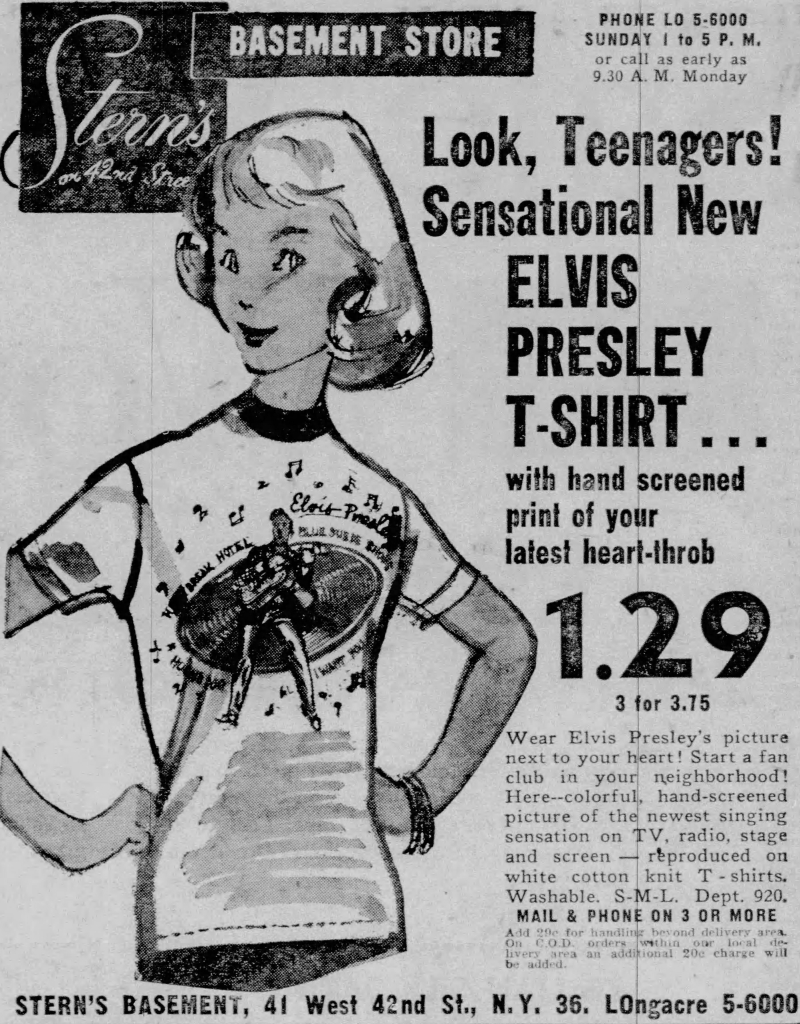
Daily News August 16, 1956
This Article from Fort Worth in 1956 echoes this idea. Harold Bell, the New York merchandising director for Elvis Enterprises, understood that teenage girls would primarily drive sales of Elvis-related clothing.
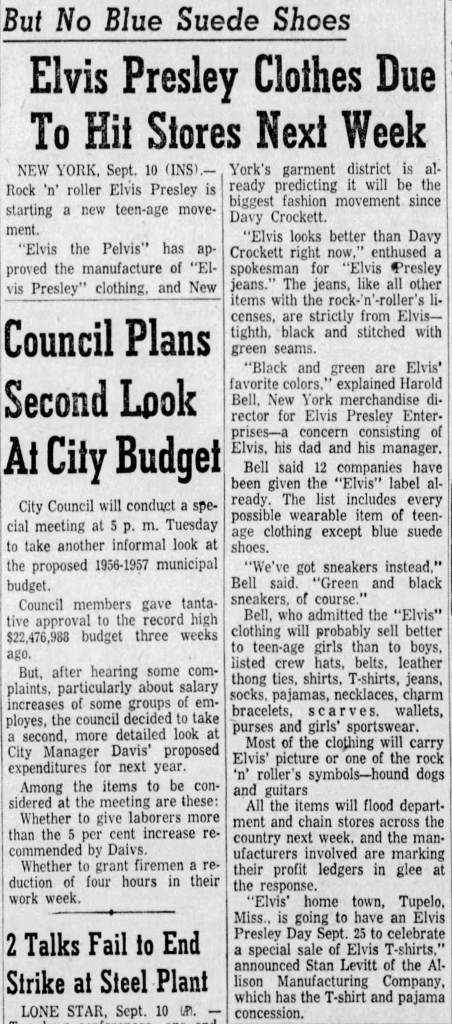
Fort Worth Star-Telegram 1956
The first verified instance of an adult wearing an Elvis T-shirt doesn’t appear until 1957, suggesting that the 1956 run was marketed squarely to younger fans who were already driving the rock ’n’ roll craze.
The earliest known record of an adult wearing an Elvis T-shirt comes with a story that perfectly captures the era’s shifting attitudes. It also reinforces just how unusual it was for grown-ups to wear T-shirts — let alone printed ones — in the 1950s. In Bastrop, Louisiana, Mayor A.P. Carter wagered radio announcer Carl Livingston that his townspeople were “anti-Elvis.”
To his surprise, the local fans proved him wrong. As part of the bet, the Mayor was forced to sing “Love Me Tender” — while wearing an Elvis T-shirt.
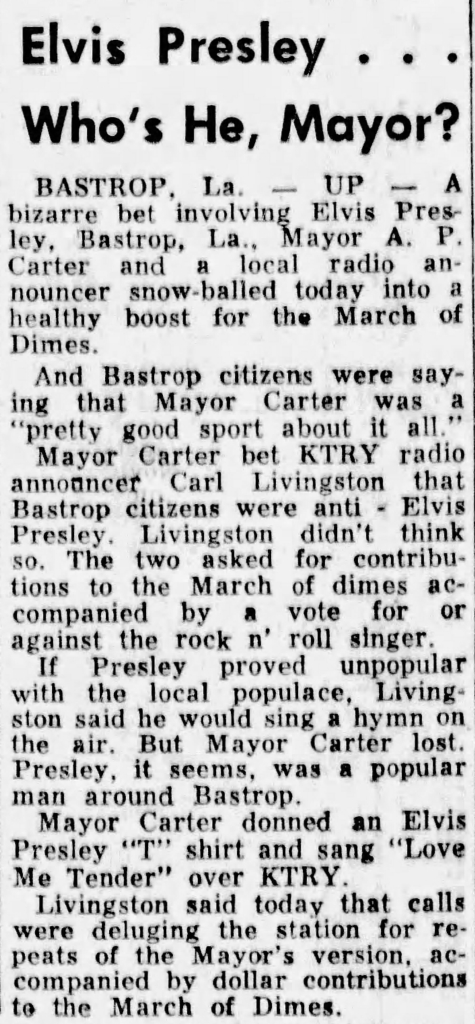
The Daily Iberian, January 1, 1957
For the record, the Mayor was a robust man (below, right). If he were able to wear, what we are admittedly assuming to be one of the licensed Elvis tees (it might not be, as there’s no photograph of the event), it was clearly made in adult sizes.
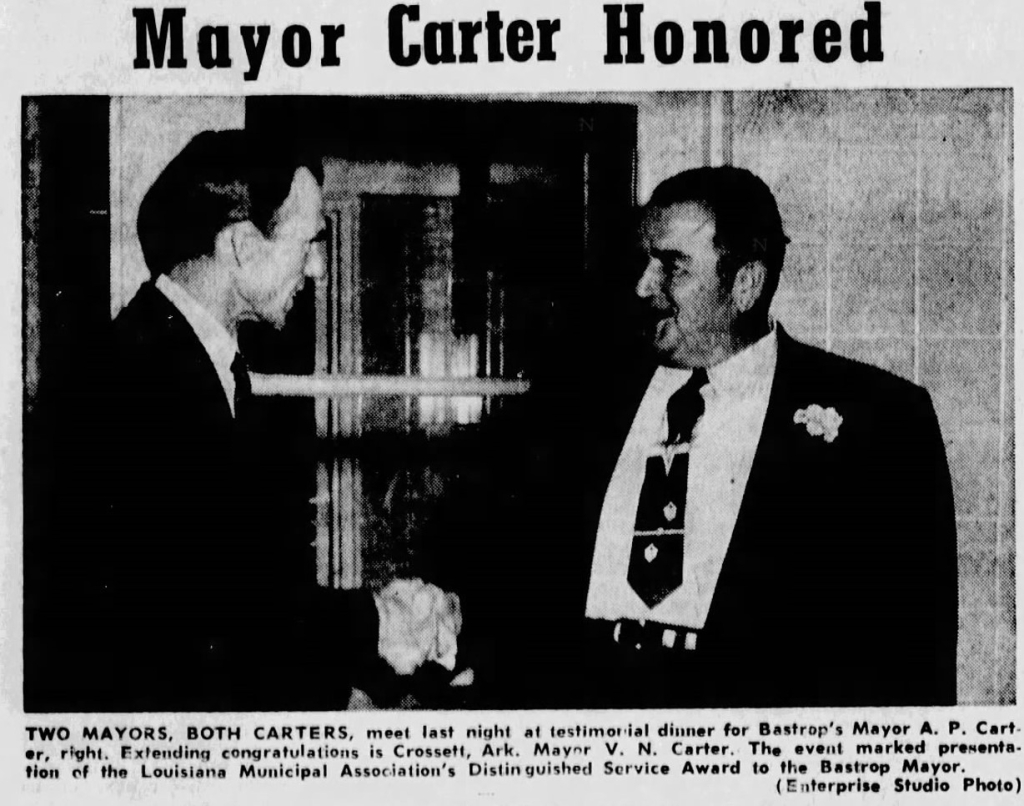
The Bastrop Clarion 1956
We’ve also been told that a photo exists of Colonel Tom Parker wearing an Elvis t-shirt, but we’ve yet to find it. No verified archival photo of Parker in an Elvis T-shirt has surfaced; leads welcome.
Alas, the photo does exist. How the Colonel is wearing that is a whole new mystery. We’ve never found one with a chest beyond 20″.
Was it a custom order, do rare XXL sizes exist? Or did he just drape it across his chest, under the blazer for the photo?
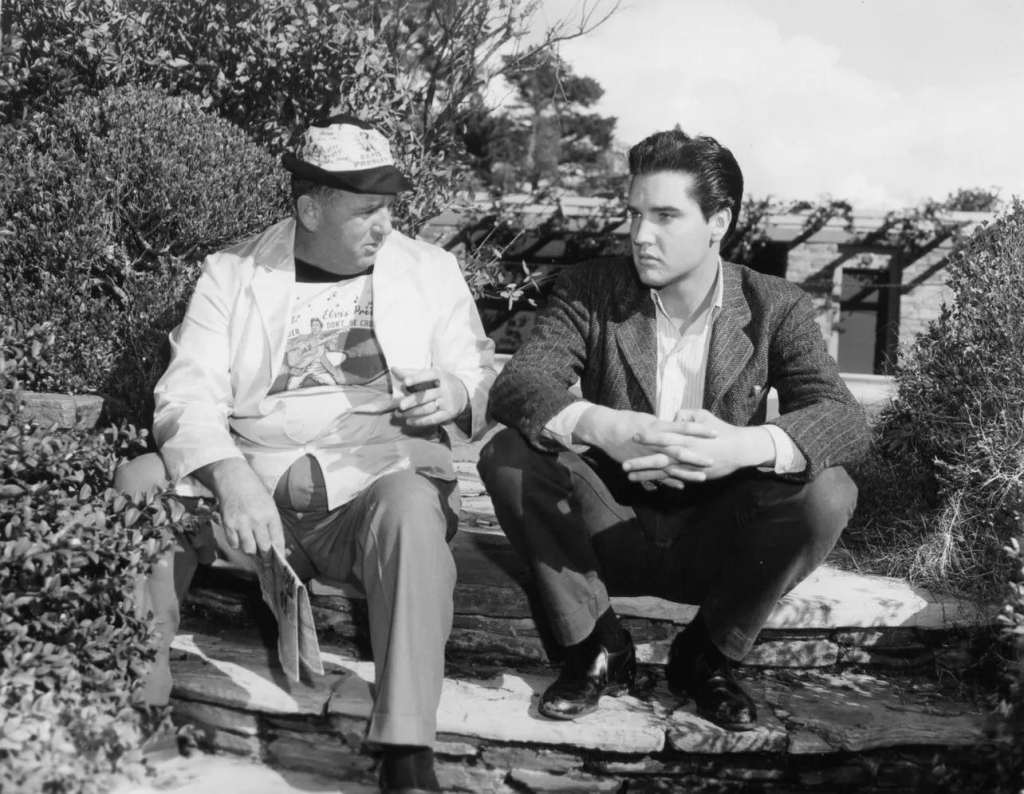
Courtesy: Graceland
Conclusion
When it comes to the first rock T-shirt, Elvis didn’t just shake up the charts — he pressed his legacy into fabric. Elvis didn’t just move hips — he moved units. And somewhere between the stage and the silk screen, the first rock T-shirt left the building.
1950s Elvis T-Shirt Variants
Shirt Types
- Crew Neck (Collar Ringer)
- Full Ringer (Including Sleeves)
- Long-sleeve Ringer (Pajamas)
- Long-sleeve Boatneck
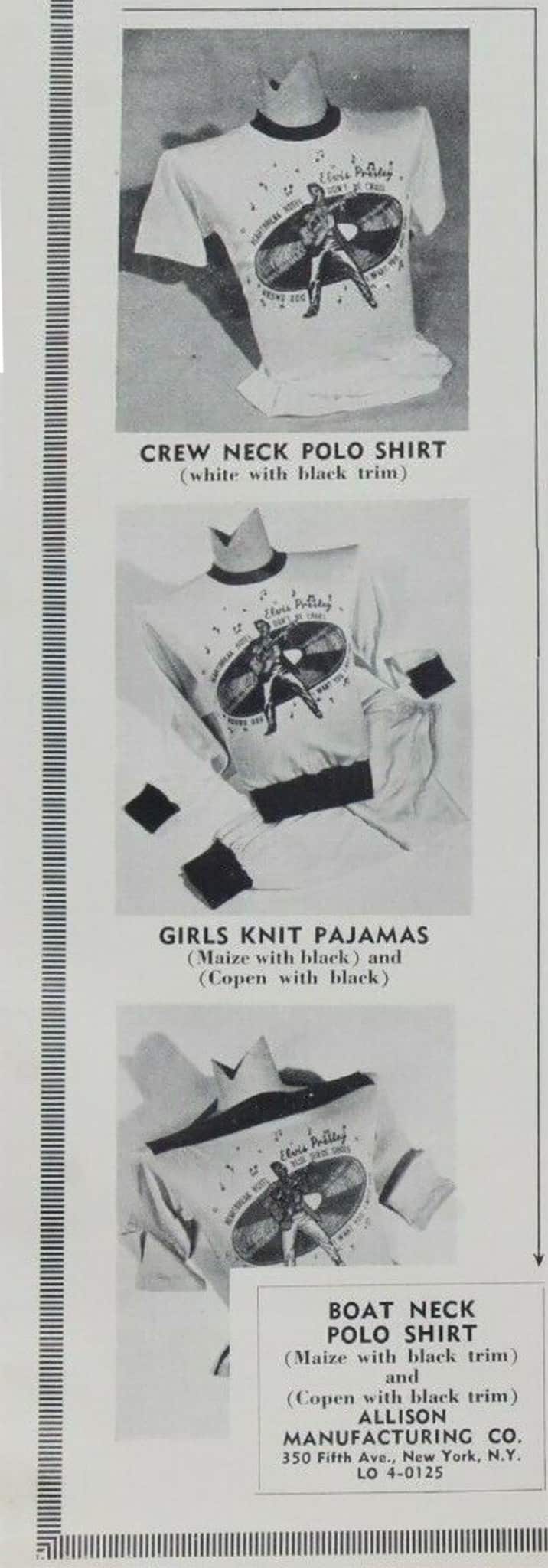
We discovered there are several more variations of this print than we were aware of. For one, the print uses a different base color (the record and text) depending on the shirt’s color.
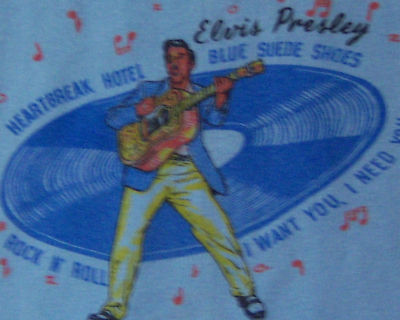
WorthPoint
As previously mentioned, not all — far fewer than we studied —have the copyright information printed below the graphic.
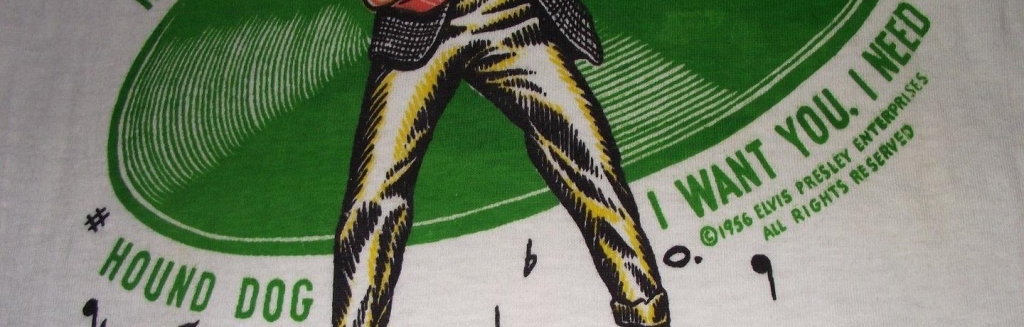
WorthPoint
There’s also a lesser-seen one-color print in circulation.
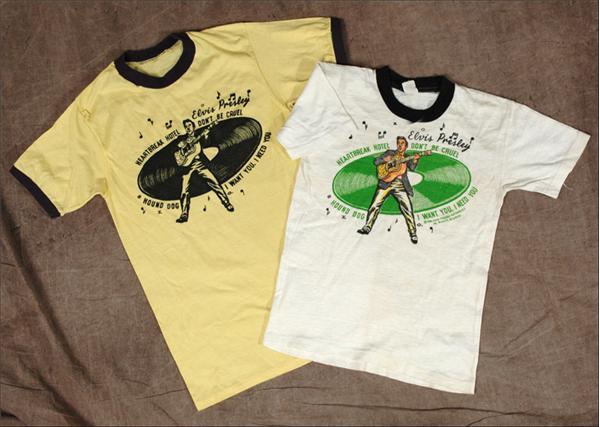
WorthPoint
The following variant features “LOVE ME TENDER” swapped in over “HEARTBREAK HOTEL,” using nearly the same artwork, but with more musical notes, which are in multiple colors, unlike the “HEARTBREAK” version, which has them as a single color.
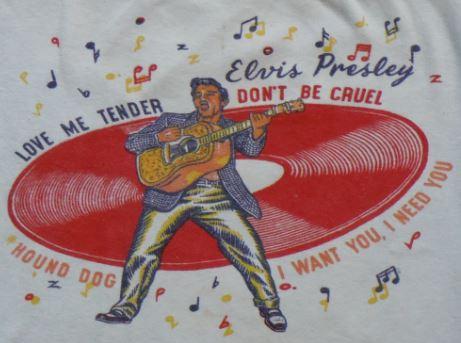
defunkd
The third one (below), which appears to be the rarest, is clearly inspired by the first two. But this is an entirely new design.
Is this the first Bootleg Rock t-shirt?
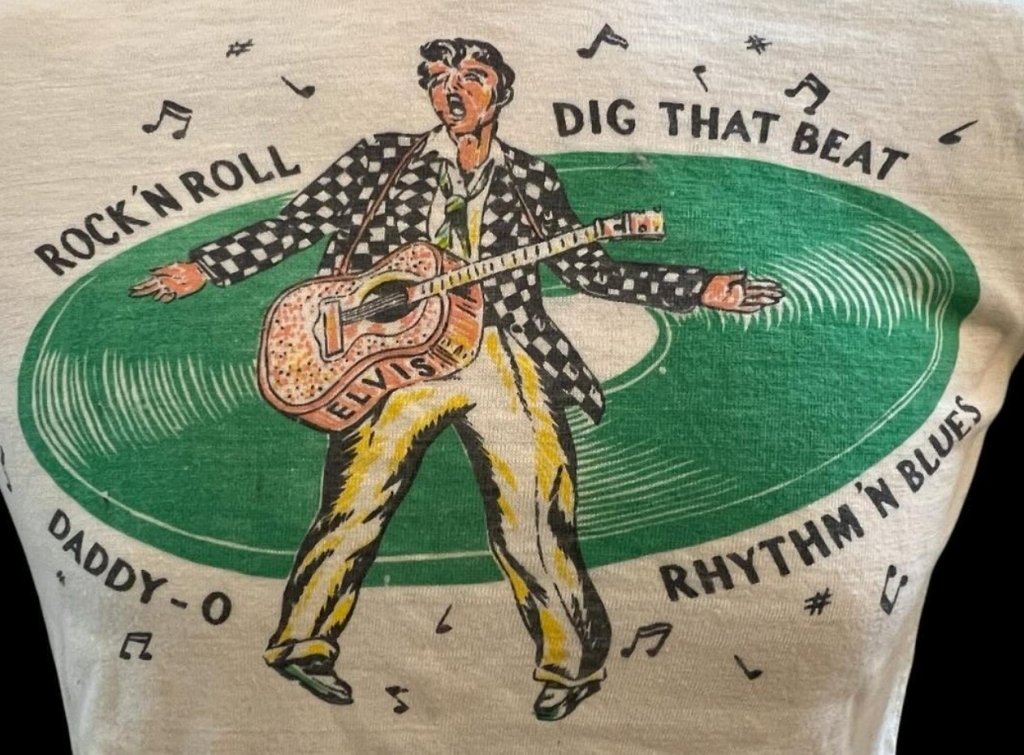
IG/epblvdpawnshop
The print doesn’t have the fine details the original has. It doesn’t have Elvis’ full name on it; there is no reference to a specific song; instead, buzzwords replace them. We also haven’t spotted this exact design among any of the official Elvis swag catalogs and ads we’ve found. We’re not yet sure how this fits into the vintage Elvis t-shirt universe, but this has all the hallmarks of a bootleg.
If that’s true (and it’s only a very loose theory at this point), this would mark the first bootleg rock t-shirt, ever. So we’ll continue hunting for one of these in the wild or documented for sale in that era.
We’d be curious to see what t-shirt tag it features—if, in fact, it’s Allison, then it is certainly not a bootleg.
And there are a few other loose ends we’d like to tie up…
Return to Sender: Still Waiting on the Proof
Every good pop-culture origin story comes with a few missing receipts — and the first rock T-shirt is no exception.
The Licensing Puzzle:
The August 25, 1956 issue of Billboard confirms that Henry G. Saperstein’s Special Products, Inc. launched an official line of Elvis Presley merchandise — including a T-shirt — and surviving EPE/Allison-tagged garments prove that Allison Manufacturing Co. produced Elvis tees that same year.
Yet no single surviving document — no contract, invoice, or press release — has been found that explicitly ties Special Products to Allison. The evidence strongly suggests that Special Products managed the licensing while Allison handled production and distribution, much as they had with TV properties like Rin Tin Tin and Captain Gallant. But until that document surfaces, the link remains a well-supported inference, not a verified fact.
The Bobby-Soxer Question:
Another long-circulating bit of lore claims that 1940s Bobby-Soxers hand-wrote their favorite crooners’ names — usually “Frankie” for Frank Sinatra — across their sweaters and blouses. Often, it’s said they used lipstick to do this. The story feels right, but so far, no verified photo has surfaced to confirm it. Also, lipstick doesn’t seem like the best choice to write on clothing. It may well have happened, but it lives in that fascinating gray space between cultural memory and historical evidence.
We’ve verified that Bobby-Soxers scrawled messages in lipstick on the wall of New York’s Paramount Theatre — often enough that management reportedly had to sandblast the facade “every five years or so” to remove the fan graffiti. Interestingly, the article also notes, Elvis’s name “hasn’t made either the Paramount stage or wall.”
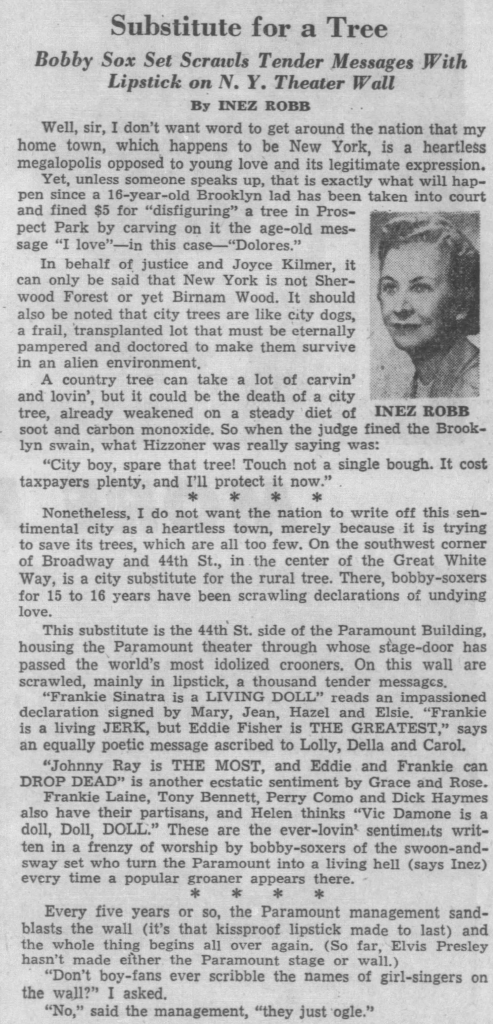
Honolulu Star-Bulletin (July 31, 1956)
Why It Matters:
The history of the first rock T-shirt — like much of early fan culture — is stitched together from fragments: trade blurbs, vintage tags, auction finds, and fan recollections. Each piece brings us closer to understanding how music fandom became wearable.
If you’ve uncovered a clipping, contract, photograph, or piece of clothing that fills in one of these missing links, please get in touch.
In music history, even the smallest thread can change the pattern.

James, aka Jimmy J, founded Defunkd 21 years ago, and has been buying, selling, collecting and studying vintage t-shirts ever since. He's had a special interest in authenticity since 2010 when he created the blue print for the t-shirt authentication process. For more, check the history of Defunkd and Jimmy's Expertise.